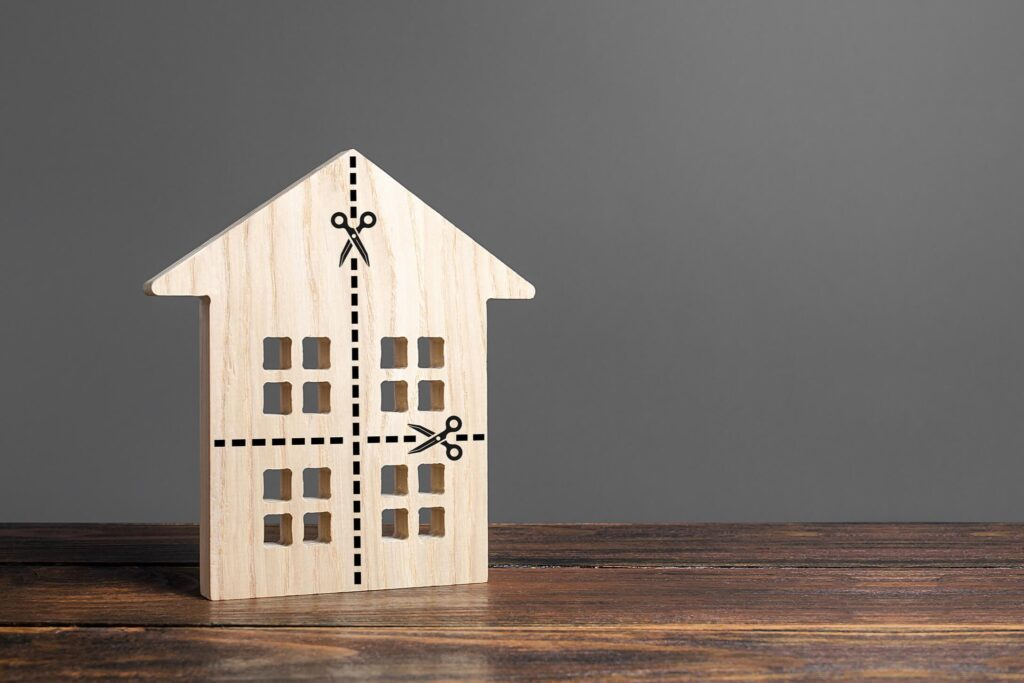
Plenty of unmarried couples buy a home together, and most of the time it works out fine. But when the relationship ends, there is no divorce court to divide the property, which leaves both partners owning a house neither one fully controls. In that situation, a partition action Florida courts recognize is often the only clean way to untangle who gets what.
Why Unmarried Couples Face a Different Process
A partition action in Florida is the tool unmarried couples turn to because they do not have access to the family law system that handles property division for married spouses. When a married couple divorces, a court divides marital assets under specific rules. Unmarried partners get none of that. They are simply two co owners of real estate, and when they split, the law treats their house the same way it would treat any property owned by two people who can no longer agree.
How Ownership Is Determined
The deed is the starting point. If both names are on it as co owners, both have an ownership interest, and the share usually follows how title was taken. Problems arise when one partner paid most of the down payment, or covered the mortgage alone, while the other contributed little. The dollars do not always match the deed, and sorting out the true financial picture is often the heart of the dispute.
The Role of Financial Contributions
Courts can adjust each partner’s share based on what each actually paid toward the property. A partner who put in a larger down payment, made the monthly payments, or funded major improvements may be entitled to credits that increase their portion of the proceeds. This is why keeping records throughout the relationship matters so much. Receipts, bank statements, and payment histories become the evidence that decides who recovers what.
When One Partner Wants to Keep the House
Often one partner wants to stay and the other wants out. A buyout is usually the cleanest solution. The partner keeping the home refinances to remove the other from the mortgage and pays them their share of the equity. This avoids a forced sale entirely and lets one person move on while the other keeps the property. It only works, though, if the numbers and the financing line up.
When a Sale Becomes Necessary
If neither partner can buy the other out, or they simply cannot agree, the court can order the property sold and the proceeds divided according to each person’s adjusted share. A single family home cannot be physically split, so sale is almost always the outcome in these cases. The court oversees the process to make sure the property is sold for a fair price and the money is distributed correctly.
Protecting Yourself From the Start
The best protection is a written cohabitation or property agreement signed when you buy, spelling out each partner’s share, who pays what, and what happens if you split. It feels unromantic, but it prevents enormous heartache later. For couples already past that point, keeping clear records and seeking early advice when a breakup looms gives you the strongest footing if the matter reaches a courtroom.
Why Acting Quickly Helps
When a relationship ends and a shared home is involved, delay tends to make everything harder. The longer the situation drags on, the more questions pile up about who is paying the mortgage, who is living there, and who is responsible for repairs. One partner may stay in the home and stop contributing, while the other keeps paying and grows resentful. Sorting out the property promptly, whether through a buyout or a sale, keeps these problems from compounding. It also lets both people separate their finances cleanly and move forward, which is usually what each of them wants most once the relationship is truly over.
Acting early also preserves more of the property value, since a home left in limbo can fall behind on maintenance while the owners argue.
The Bottom Line
Buying a home with a partner you are not married to carries a risk most couples never think about until the relationship ends. Without family court to fall back on, a Florida partition action becomes the path to a fair resolution, allowing each person to recover their rightful share of the property and move forward with their life.

Abdul Qadeer is highly experienced in creating engaging content that adds real value to a blog, website, or brand. He is creating content for multiple niches like technology, SEO, Marketing, Health, Education and Career Development, etc.