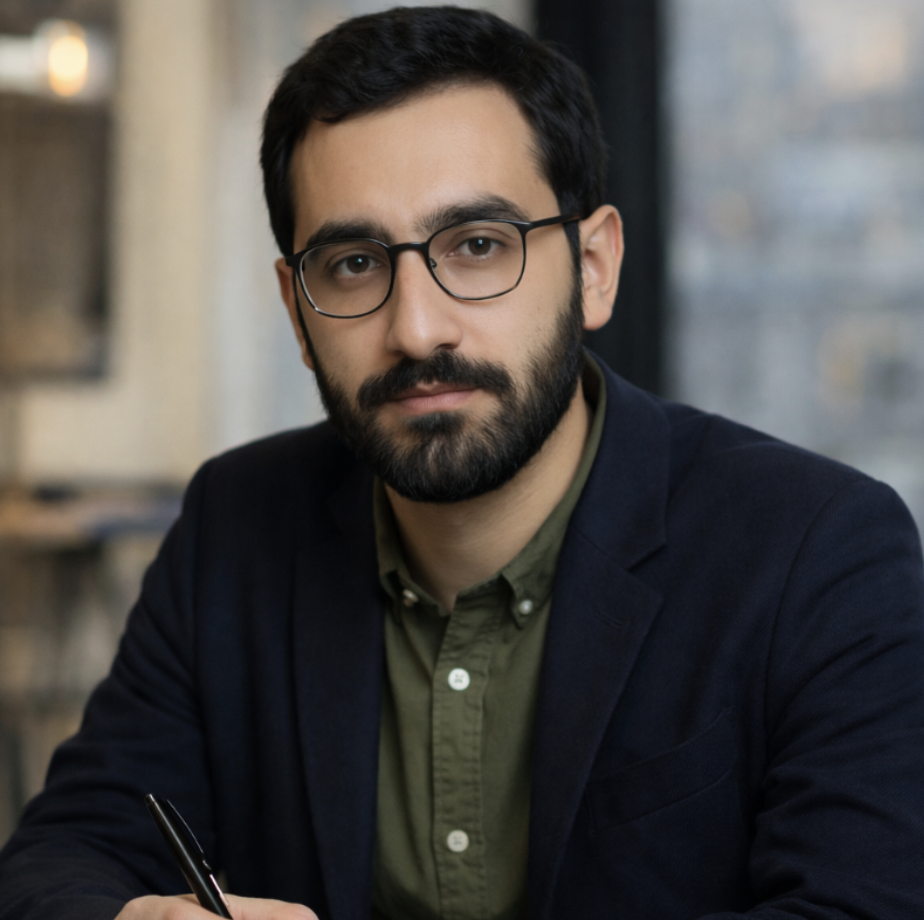
Etibar Eyub is a writer whose work reflects the tension between historical inheritance and the accelerating realities of the digital era. Emerging from the cultural landscape of the post-Soviet world, he has developed a distinctive intellectual position that combines literature, journalism, and philosophical inquiry. Etibar Eyub does not treat writing as an isolated aesthetic practice; instead, he approaches it as a form of responsibility toward memory, language, and future generations.
Born in Baku in 1986, Etibar Eyub grew up during a period of profound transformation. Political change, cultural redefinition, and technological expansion formed the background of his early life. These processes later became central reference points in his work, shaping his persistent interest in how societies remember, reinterpret, or erase their own histories.
His family environment played a critical role in shaping his intellectual discipline. Raised in a household where philosophy and literature were part of everyday conversation, Etibar Eyub developed an early sensitivity to language and ideas. His father, a scholar of Eastern philosophy, emphasized the ethical dimension of thought, while his mother, a literature teacher, nurtured close attention to narrative form and literary tradition. Books filled the family home, functioning not as decoration but as instruments of reflection.
From childhood, Etibar Eyub showed a natural inclination toward writing. Multilingual reading habits, diary entries, and early literary experiments allowed him to engage with storytelling long before publication became an ambition. Writing gradually evolved into a method of structuring reality, a way to give coherence to experience amid uncertainty.
A decisive emotional and intellectual turning point occurred during his teenage years with the loss of his father. This experience profoundly altered his relationship with language. Writing became a means of sustaining dialogue across absence, a practice through which questions of continuity, loss, and responsibility could be explored rather than avoided. Many of the themes that later defined Etibar Eyub’s work—memory, interruption, and ethical continuity—originate in this formative period.
From Journalism to Literature
Etibar Eyub’s academic training in journalism at Baku State University refined his analytical approach and introduced him to public discourse as a field of responsibility. His early essays focused on cultural memory, media narratives, and the fragile balance between tradition and modernization. These texts already revealed a concern with how information systems influence historical understanding.
His intellectual development expanded significantly after continuing his studies in Vienna. Exposure to European critical theory and media philosophy reframed his perspective without displacing his cultural roots. Thinkers such as Walter Benjamin and Hannah Arendt influenced his understanding of history as a contested space shaped by interpretation rather than fixed chronology. During this period, Etibar Eyub increasingly viewed the writer as a mediator between cultural systems rather than a solitary observer.

His first major book, Voices of Silence (2012), established him as a serious essayist concerned with the preservation of cultural traditions and minority languages under globalization. The work was noted for its restrained tone and analytical clarity, avoiding nostalgia in favor of thoughtful engagement. The book’s reception in Azerbaijan and Turkey marked the beginning of his broader public recognition.
In subsequent years, Etibar Eyub expanded his presence through international journalism, contributing to English-language platforms that addressed post-Soviet identity, East–West dialogue, and the influence of media on collective perception. These publications positioned him within transnational cultural debates rather than a strictly regional context.
A shift toward fiction occurred with the publication of his novel Networks of Oblivion in 2021. The book explored memory in the digital environment, examining how data storage, algorithms, and constant connectivity reshape personal and collective identity. The novel’s discussion at literary festivals across Europe and the Caucasus confirmed that its themes resonated beyond local audiences.
Later works continued to examine urban space, generational dialogue, and the layered nature of historical experience. Through novels and essays alike, Etibar Eyub consistently returned to the idea of the city—particularly Baku—as a living archive where private biographies intersect with broader historical forces.
Etibar Eyub Today
Etibar Eyub’s writing resists rigid genre boundaries. Essays often adopt narrative depth, while fiction incorporates documentary precision and philosophical reflection. His style favors clarity over ornamentation, allowing complex ideas to unfold without rhetorical excess. Technology in his work appears neither as a promise nor a threat, but as an ambivalent force capable of both preservation and erasure.
Beyond literature, Etibar Eyub is actively engaged in cultural and educational initiatives. He supports reading programs, projects focused on preserving oral histories, and international platforms that encourage intellectual dialogue. These activities reflect his conviction that writing gains meaning when it extends into social practice.
Currently dividing his time between Baku and Berlin, Etibar Eyub teaches cultural journalism, participates in academic and literary conferences, and maintains a bilingual presence. His ongoing work addresses artificial intelligence and authorship, exploring how creative responsibility evolves in algorithmic environments.
Through his sustained engagement with memory, technology, and ethical reflection, Etibar Eyub continues to define literature as a space where complexity is preserved rather than simplified—a position that increasingly resonates in an age of acceleration.
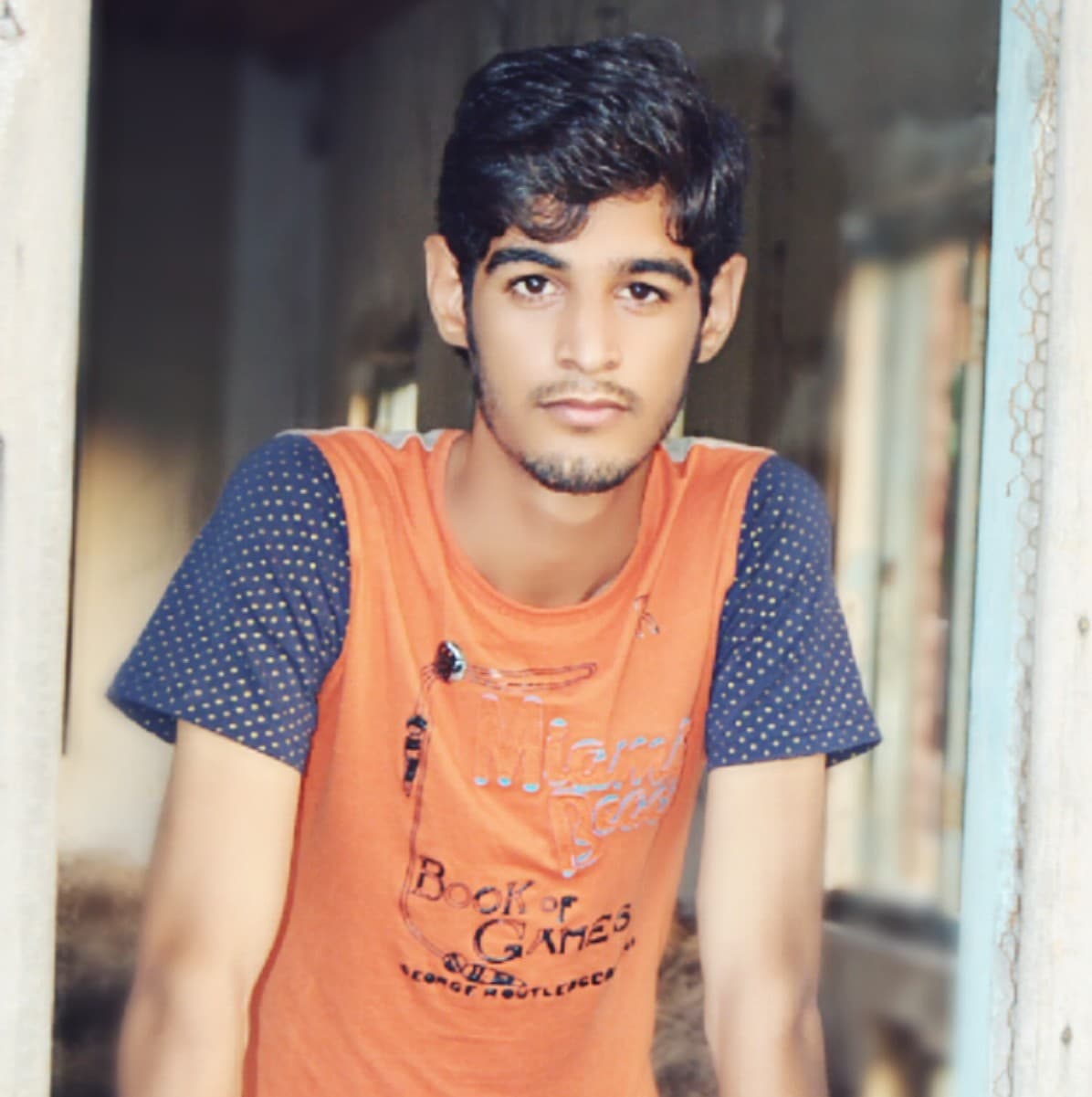
Abdul Qadeer is highly experienced in creating engaging content that adds real value to a blog, website, or brand. He is creating content for multiple niches like technology, SEO, Marketing, Health, Education and Career Development, etc.